Curation and Taste in the Age of Vibe
Feb 2, 2026
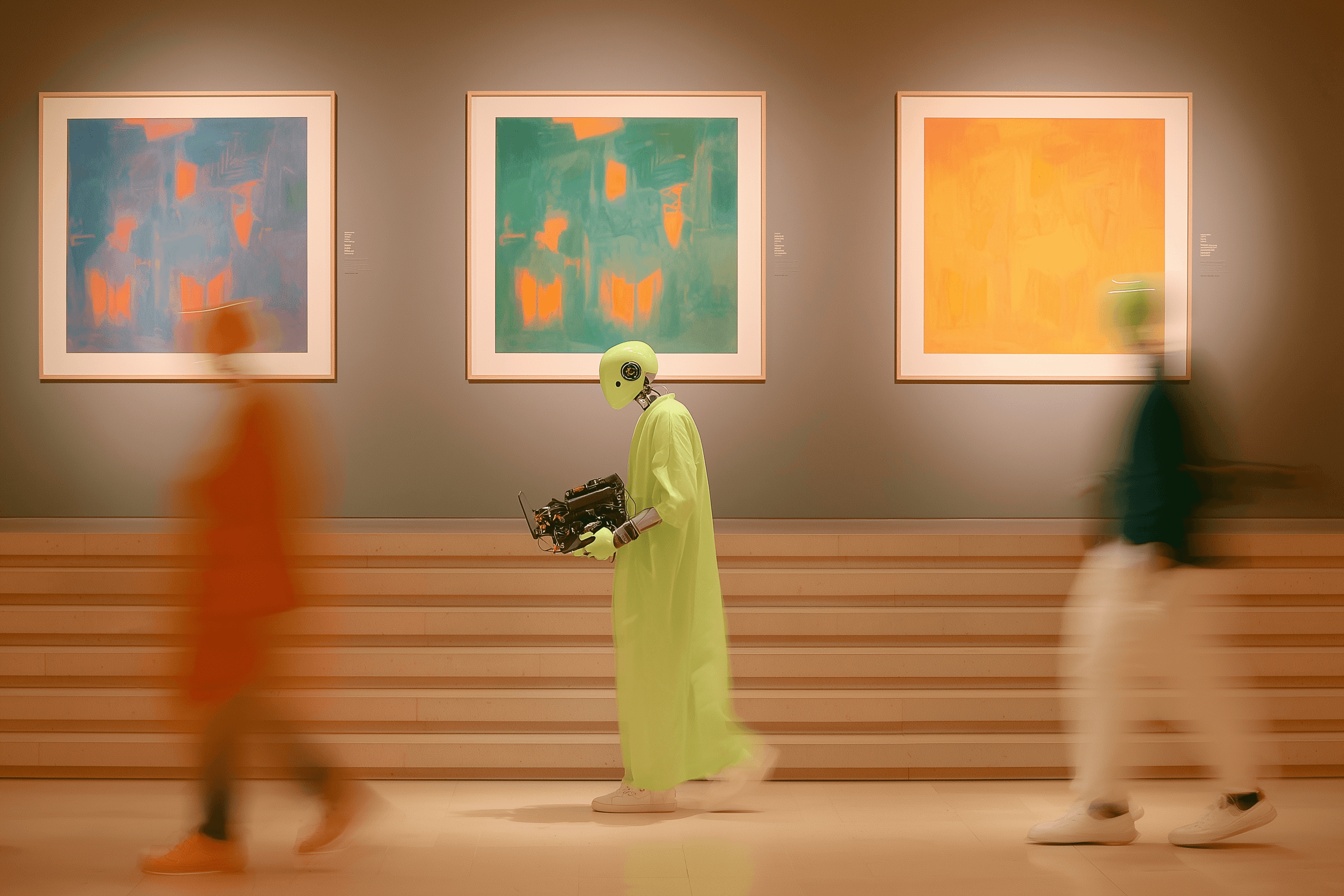
Infinite possibility. Unlimited ideas created in an instant. That's the promise of Gen AI + LLM creative tools. What we’re getting instead is infinitely sloppy sameness.
Scroll through Product Hunt and look at some new SaaS landing pages. Same layouts. Same sans-serif headers over three-column feature grids. Same icons. Same product descriptions that "elevate your business" and "transform your daily routine."
The tools aren't necessarily bad. But without strong intent, taste, and direction from humans, generative builders are defaulting to blandness.
The antidote? Taste and curation have to re-emerge as strategic advantages in order for businesses and their cultural impact to survive.
Taste: why humans direct
Shopify’s recent RenAIssance Editions demonstrates the alternative. Their seasonal product releases continuously show clear creative strategy, especially the most recent Winter 2026 Edition: it doesn't take much time to realize that there were multiple humans shaping direction and iteration.
It's AI-assisted work, not AI-authored work. (Yes, that's an AI-coded sentence format, so sue me)
The tools are subordinate to the creator’s intent. Because “taste” exists upstream — in strategy sessions, design critiques, editorial meetings, and not injected haphazardly after generation.
The work has personality. It doesn't feel like it could have come from anywhere, or generated by just anyone.
Taste.
The convergence problem
Most AI-generated products are instantly recognizable. Not because they're bad, many are perfectly adequate. But because they're built with statistical sameness from the start.
Tailwind CSS layouts with “sensible” spacing. Neutral typography that offends (and stands out to) nobody.
The UI patterns are lifted from a massive dataset of “successful” examples. but the best practices converge. Convergence creates monoculture.
The absence of taste at the moment of initiation produces identical outcomes: the limitation of infinite outcomes based on a limited input.
Prompt without specificity, without examples, without an aesthetic point of view, and you get the statistical centre of their distribution.
The speed constraint
Another factor is token optimization, functioning by design like budget optimization: a constant desire (no, a need!) for cheaper, faster outputs.
The same pressure that degrades any craft when speed becomes the primary constraint.
A slow-smoked brisket requires 12+ hours at controlled temperature. You can't rush it. The time to make it directly influences the quality of the output.
Fast food isn't worse just because it uses fewer ingredients. It's worse because the time it takes to make a great burger got removed from the process, and so fewer and more synthetic ingredients HAD to be used.
Film CGI followed the same trajectory. Early digital effects were expensive, labor-intensive, but carefully crafted. Studios spent weeks or even months on single sequences. But over time, budgets tightened and timelines were compressed for faster release cycles.
Work was outsourced to the lowest-bidding studio.
The difference is visible. Think of the CGI difference between the first Iron Man or other MCU movies from later 2000’s/early 2010’s compared to the most recent projects like Madam Web or Thor: Love and Thunder.
We have newer, "better" technology, yet decade-old (or even older) movies have CGI that looks more seamless.
Moving at the speed of thought is producing designs that function but don't differentiate.
Token-optimized content has the same tell. The accumulation of fast decisions produces quickly created work without the depth of creativity.
Where human judgment matters
The strategic response isn't rejecting AI. It's understanding where human judgment creates value.
Humans shouldn’t just be approving outputs. They need to be shaping the complete direction with an intended, specific outcome from the outset.
Providing references before generating options. Rejecting outputs that technically work but aesthetically fail. Making taste-based decisions about what not to produce. Choosing constraints deliberately rather than accepting defaults.
You see this in brands that still feel distinct. That's why Substack and Beehiiv are exploding: niche newsletters with/from curatorial voices. Or opinionated brands/online stores that stock just a handful of hand-selected products, not every SKU under the sun.
Or writers who sound like themselves.
When anyone can generate anything, the differentiator becomes: Should you? Should it look/feel/sound like this? Does this serve the intent?
Those questions require taste. Taste cannot be automated.
The moving frontier
What differentiates today becomes reproducible tomorrow.
Stock photos gave way to custom photography. Custom photography gave way to illustration. Illustration gave way to animation. Animation is giving way to generative visuals.
Each wave of creative output eventually becomes commodified. What was expensive becomes cheap. What was distinctive becomes default. The frontier moves.
Taste requires ongoing work, and it’s really hard to established once you’re already started, let alone maintain.
You have to keep developing taste, you must keep choosing deliberately.
The brands that maintain differentiation aren't the ones who found a style and stuck with it: they're the ones who keep choosing.
What remains human
The age of vibe does not remove curation. It makes it unavoidable.
Tools will keep improving. Outputs will keep getting cleaner, faster, cheaper.
But the unresolved question, the one that determines whether your work matters, remains:
Should this exist at all?
That question still belongs to humans.
Charting a path through the content cosmos